|
 |
||||

|

|
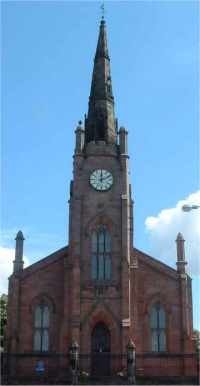
Gartsherrie Gartsherrie, a suburban town and quod sacra parish in Old Monkland parish, Lanarkshire. The town is partly identical with the E side of Coatbridge, partly extends about a mile to the NNW and lying along the Monkland Canal and reaches of the Caledonian and North British railway systems, presents an urban aspect throughout its identity with Coatbridge and a strictly suburban aspect in its north-westward extension. It contains, in its urban part, the parish church and a large academy in its suburban part, extensive iron-works and dwelling-houses for the opera- operatives in these works, being collectively the most prominent of the seats of iron manufacture which give to Coatbridge district its characteristic aspect of flame and smoke and busy traffic. It has a station of its own name on the Caledonian railway, near the fork of the line towards respectively Glasgow and Stirling, One and a quarter miles NNW of Coatbridge station.
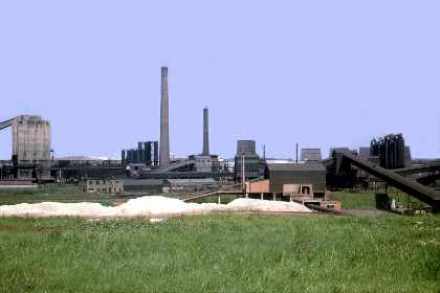
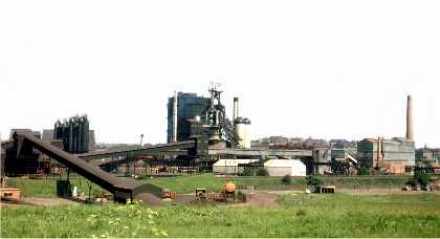
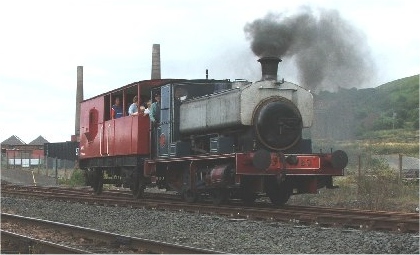
The demand for iron and the savings to be made using the hot blast resulted in infringements of J B Neilson's patent for the process. The Bairds, had made a fortune from coal mining and were investing this fortune in iron works. They had two coal pits at Gartsherrie and built blast furnaces there in 1830 using the hot blast process without a licence. Neilson sued successfully for 160,000, a sum that Baird easily afforded from the huge profits being made. The iron-works of Messrs. Baird, first put in blast on 4 May 1830, are among the best organised manufacturers in Scotland, and have long bad a wide and high reputation for producing iron of superior quality. The furnaces, 22 feet in diameter and 60 high, stand in two rows, one on each side of the canal, and about 40 yards distant from it.
There are several hundred workmen's
houses, each with two or three
apartments, a small garden plot, and
a cheap supply of gas and water.
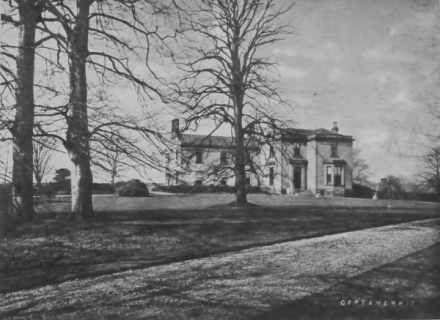
Gartsherrie has become famous in the history of the Scottish iron manufacture. Messrs. Wm. Baird & Co. have held leases of the coal fields there since 1826, and of the mansion house and adjoining lands since 1834. The house, a portion of which is said to be of some antiquity, has been repeatedly added to. It was for some time occupied by the late William Baird of Elie and Rosemont, and thereafter by his brother, James Baird of Auchmedden, Cambusdoon and Knoydart. It was later occupied their nephew and partner, Alexander Whitelaw of Gartshore (1823-79) M.P. for Glasgow, and the able first chairman of the Glasgow School Board. The parish is in the presbytery of Hamilton and synod of Glasgow and .Ayr, and was endowed entirely by the late James Baird, Esq. of Cambusdoon.
Pop. of parish (188I) 9070, (1891)
12,155.
By 1868 the Bairds owned 4 ironworks, plus many coal and ironstone mines. Gartsherrie was the largest ironworks in Scotland (and the second largest in Britain), followed by Summerlee Ironworks. Gartsherrie survived until 1967, and might have survived longer but it missed an opportunity to link the ironworks with the adjacent Northburn steelworks and become one of the first integrated steelworks.
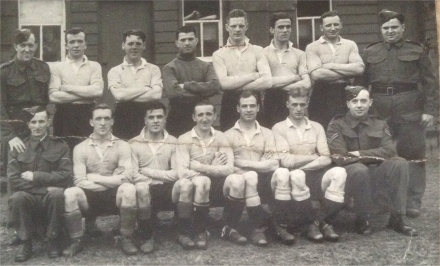
Photos from Jim Johnston of the Home Guard Football team 1942 click on the photo for larger image email received 3rd Feb 2014 Just came across your website, spent ages perusing the various sections, especially memories. I was born in 1943 at 48 the long row Gartsherrie with memories of the wash houses and gas lighting. My father worked in the smiddy opposite gartsherrie ironworks and played football for gartsherrie united along at a park known as the sandy hole just along the road. They were a group of friends called Goody, Flinty, Monty and Doods. There real names were Bobby Goodfellow, (?)Findlayson, Montgomery and Sam Johnston, my father. Jim Johnston
|
|
Copyright
Monklands
Memories 2000-2017 |